Fire Safety and Prevention
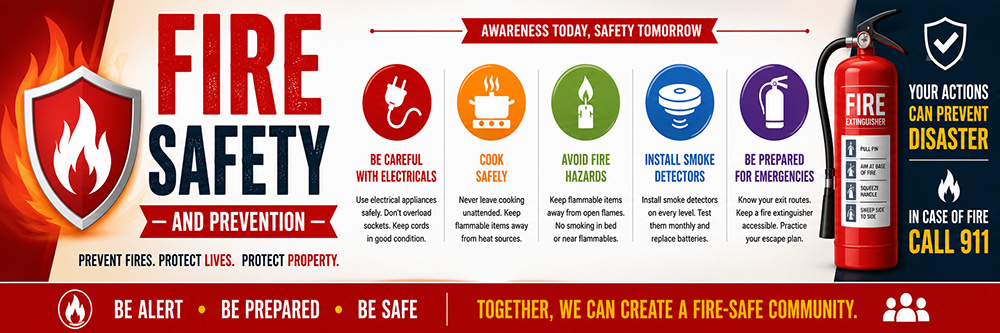
Fire safety begins with prevention, preparation, and awareness. Many fires can be prevented by taking simple steps at home, at work, and throughout the community. The information below highlights important fire prevention topics and safety practices that can help protect lives, property, and first responders.
Smoke Alarms
Working smoke alarms provide early warning and give people more time to escape during a fire.
Install smoke alarms on every level of your home, inside each bedroom, and outside sleeping areas. Test alarms at least once a month and replace batteries as needed, unless your alarms have sealed long-life batteries.
Replace smoke alarms when they are 10 years old or if they do not sound when tested. Make sure everyone in the home knows the sound of the alarm and what to do when it activates.
Home Escape Planning
Every household should have a fire escape plan. During a fire, conditions can change quickly, and thick smoke can make it difficult to see or breathe.
Identify two ways out of every room, usually a door and a window. Make sure windows open easily and that exits are not blocked. Choose a safe meeting place outside, such as a mailbox, tree, or neighbor’s driveway.
Practice your escape plan with everyone in the household. Once outside, stay outside and call 911 from a safe location. Never go back inside a burning building.
Cooking Safety
Cooking is one of the leading causes of home fires. Staying alert in the kitchen is one of the best ways to prevent a fire.
Stay in the kitchen when frying, boiling, grilling, or broiling food. Keep towels, paper, packaging, curtains, and other items that can burn away from the stovetop.
Turn pot handles inward to prevent spills and burns. Keep children and pets at least three feet away from hot appliances.
If a small grease fire starts in a pan, carefully slide a lid over the pan and turn off the burner. Leave the pan covered until it is completely cool. Never use water on a grease fire.
Heating Safety
Heating equipment should be used carefully and maintained properly.
Keep anything that can burn at least three feet away from furnaces, fireplaces, wood stoves, portable heaters, and other heat sources. Plug space heaters directly into wall outlets and turn them off before leaving the room or going to sleep.
Have chimneys, fireplaces, furnaces, and heating systems inspected and cleaned as recommended. Use a fireplace screen to prevent sparks from escaping, and place cooled ashes in a metal container away from the home.
Electrical Safety
Electrical problems can cause fires when wiring, outlets, appliances, or cords are damaged or overloaded.
Do not overload outlets or extension cords. Extension cords should only be used temporarily and should not be run under rugs, through doorways, or across walking paths.
Replace damaged cords immediately. If lights flicker, breakers trip frequently, outlets feel warm, or you notice a burning smell, stop using the affected area and contact a qualified electrician.
Use light bulbs with the correct wattage for lamps and fixtures.
Candle Safety
Candles are open flames and should always be used with caution.
Keep candles at least 12 inches away from anything that can burn. Place them in sturdy holders on stable surfaces and keep them away from children and pets.
Never leave candles unattended. Extinguish candles before leaving a room, going to sleep, or leaving home. Consider using battery-operated candles whenever possible.
Smoking Safety
Smoking materials can cause fires when they are not fully extinguished or are discarded improperly.
Smoke outside whenever possible. Use deep, sturdy ashtrays and make sure cigarettes, cigars, and other smoking materials are completely out before throwing them away.
Never smoke in bed or when drowsy, especially if oxygen is being used in the home. Keep smoking materials away from medical oxygen, which can make fires burn faster and hotter.
Carbon Monoxide Safety
Carbon monoxide is an invisible, odorless gas that can be deadly. It can come from fuel-burning appliances, vehicles, generators, fireplaces, and heating equipment.
Install carbon monoxide alarms outside sleeping areas and on every level of the home, according to the manufacturer’s instructions.
Never use a generator, grill, camp stove, or fuel-burning equipment inside a home, garage, basement, or enclosed area. Do not run a vehicle inside an attached garage, even with the door open.
If a carbon monoxide alarm sounds, leave the building immediately and call 911 from outside.
Grill and Outdoor Cooking Safety
Grills should only be used outdoors in well-ventilated areas.
Place grills away from siding, deck railings, fences, sheds, overhanging branches, and anything else that can burn. Keep children and pets at least three feet away from the grill.
Never leave a lit grill unattended. Clean grease from the grill and trays regularly. For propane grills, check hoses and connections for leaks before use.
If a grill fire occurs and you cannot safely control it, move away and call 911.
Seasonal and Holiday Fire Safety
Holiday decorations, candles, cooking, and heating equipment can increase fire risks during certain times of the year.
Use decorations that are flame-resistant or flame-retardant. Keep candles, lights, and decorations away from curtains, furniture, bedding, and other combustible materials.
Inspect holiday lights before use and discard damaged strings. Do not overload outlets or extension cords. Turn off holiday lights before leaving home or going to bed.
For live Christmas trees, choose a fresh tree, water it daily, and keep it at least three feet away from heat sources. Remove the tree from the home when it becomes dry.
Matches and Lighter Safety
Matches and lighters should be treated as tools, not toys.
Store matches and lighters in a locked cabinet or another secure location out of the reach of children. Teach children to tell an adult if they find matches or lighters.
Never allow children to play with fire, candles, fireworks, or other ignition sources.
Fire Extinguishers
A portable fire extinguisher can be useful for very small fires, but only when used safely.
Only use an extinguisher if the fire is small, you have a clear escape route, everyone else is leaving the building, and 911 has been called. Never allow a fire to get between you and your exit.
If you have any doubt, get out and call 911.
Older Adults and Fire Safety
Older adults may face increased risks during a fire due to mobility, hearing, vision, or medical concerns.
Make sure smoke alarms are working and consider alarms with strobe lights, bed shakers, or other alerting devices if needed. Keep eyeglasses, hearing aids, mobility devices, and phones close to the bed.
Plan escape routes around mobility needs and make sure doors, hallways, and exits remain clear.
Children and Fire Safety
Children should learn fire safety in a calm, age-appropriate way.
Teach children what smoke alarms sound like and what to do when they hear one. Practice escaping the home and going to the family meeting place.
Remind children never to hide during a fire. Firefighters may look and sound different while wearing protective gear, but they are there to help.
Wildfire and Outdoor Fire Safety
Outdoor fires can spread quickly, especially during dry or windy conditions.
Follow local burn regulations and weather restrictions. Keep outdoor fires small, attended, and away from dry grass, leaves, structures, and vehicles.
Dispose of ashes safely in a metal container after they are completely cool. Do not discard cigarettes, matches, or hot materials in mulch, grass, or wooded areas.
When to Call 911
Call 911 immediately for any fire, smoke condition, gas odor, carbon monoxide alarm, medical emergency, vehicle crash, or situation that may place people or property in danger.
When calling 911, provide the location of the emergency, what is happening, and whether anyone is injured or trapped. Follow the dispatcher’s instructions and remain on the line until told to hang up.
Prevention Starts Before the Emergency
Fire safety is a shared responsibility. By maintaining alarms, practicing escape plans, using appliances safely, and staying aware of common hazards, residents can help reduce emergencies and keep the community safer.
For questions about fire prevention, smoke alarms, home safety, or community risk reduction programs, contact your local fire department.
|